Ground improvement in Bunbury is not merely a construction preference—it is a critical engineering necessity driven by the region's complex coastal geology and expanding urban infrastructure. This category encompasses a suite of advanced geotechnical techniques designed to enhance the engineering properties of soil and rock, increasing bearing capacity, reducing settlement, mitigating liquefaction potential, and controlling groundwater. From residential subdivisions on loose sands to major highway embankments over soft estuarine clays, the need to transform poor ground into a reliable foundation is a recurring challenge. Understanding the full spectrum of improvement methods, including deep soil mixing (DSM) design and stone column design, allows engineers to tailor solutions to the specific geohazards present, ensuring long-term performance and adherence to Australian Standards.
Bunbury's geological setting is dominated by the Swan Coastal Plain, characterised by Quaternary-aged sediments including the Safety Bay Sand and the underlying Guildford Formation. These surficial deposits often consist of loose, poorly graded sands with high void ratios, making them susceptible to significant settlement under load and, critically, to liquefaction during seismic events. Interspersed with these sands are layers of soft, compressible clays and peats, particularly in low-lying areas near the Leschenault Estuary and the Collie River floodplain. The presence of a shallow, fluctuating water table further complicates construction, demanding dewatering and drainage strategies as an integral part of any ground improvement scheme. This environment makes dynamic compaction and drainage-focused solutions particularly relevant for local projects.
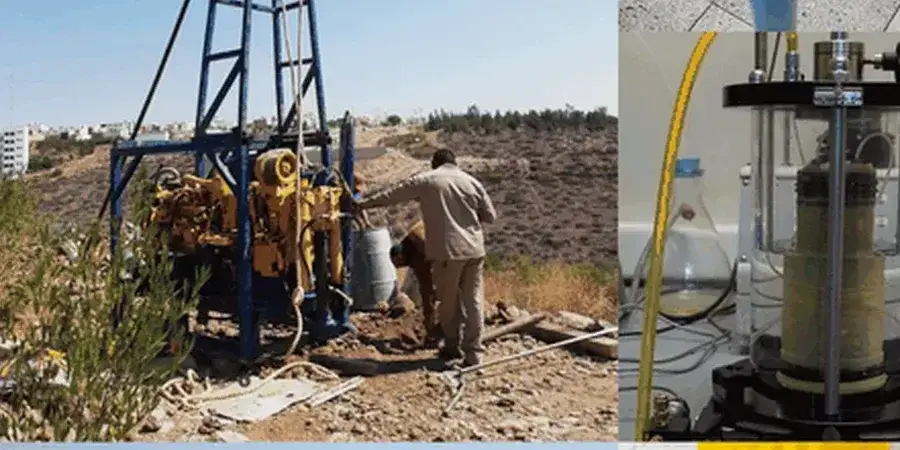
All ground improvement works in Bunbury must comply with the relevant Australian Standards, most notably AS 4678 for earth-retaining structures and AS 2159 for piling design and installation, which often govern the performance criteria for improved ground. Additionally, projects are guided by the local government's engineering specifications and the requirements of the Building Code of Australia (BCA). A thorough geotechnical site investigation, as per AS 1726, is the non-negotiable starting point, providing the soil parameters needed for design. For specialist works, such as those involving deep mixing or grouting, adherence to the execution specifications within AS 5100 for bridgeworks or specific state road authority supplements may be invoked to ensure quality control and material durability in the aggressive coastal environment.
The types of projects requiring ground improvement in Bunbury are diverse. Large-scale industrial developments in the Bunbury Port area and the Kemerton Strategic Industrial Area frequently require dynamic compaction design to densify reclaimed or natural sandy fills for heavy crane pads and storage tanks. Infrastructure projects, such as the Bunbury Outer Ring Road and upgrades to the South Western Highway, routinely encounter soft soils where prefabricated vertical drain (PVD) design is essential to accelerate consolidation of embankment foundations. Commercial and residential buildings in areas like Dalyellup or Treendale often sit on loose sands where grouting design can be employed to mitigate settlement. The management of groundwater and the prevention of moisture-related damage are addressed through geotechnical drainage design, a pervasive requirement across almost all development types in this region.
Available services
Unsaturated soil analysis
→ Ver detalleStone column design
→ Ver detalleDynamic compaction design
→ Ver detalleDeep Soil Mixing (DSM) design
→ Ver detalleGeotechnical drainage design
→ Ver detallePrefabricated vertical drain (PVD) design
→ Ver detalleGrouting design
→ Ver detalleJet grouting design
→ Ver detallePreloading design (without surcharge)
→ Ver detallePreloading with surcharge design
→ Ver detalleVibrocompaction design
→ Ver detalleGeomembrane specification
→ Ver detalleLime and cement stabilization
→ Ver detalleLandfill geotechnics
→ Ver detalleGeotechnical instrumentation (design and installation)
→ Ver detalleOrganic soil management
→ Ver detalleContaminated soil remediation
→ Ver detalleQuick answers
What is the main purpose of ground improvement in Bunbury's coastal environment?
The primary purpose is to mitigate risks associated with the region's loose sandy soils and soft estuarine clays. This involves increasing soil density and bearing capacity to prevent excessive settlement, reducing liquefaction potential during seismic events, and controlling high groundwater. These treatments transform problematic natural ground into a reliable construction platform for buildings, roads, and industrial facilities, ensuring long-term structural integrity and compliance with Australian Standards.
Which Australian Standards govern ground improvement design and testing in Bunbury?
Key standards include AS 4678 for earth-retaining structures, which often defines performance criteria for improved ground, and AS 2159 for piling design. The site investigation itself must follow AS 1726. For quality control, methods like deep soil mixing or grouting often reference execution specifications found in AS 5100. Additionally, all works must meet the Building Code of Australia and any specific requirements set by the City of Bunbury for engineering approvals.
How do I determine the most suitable ground improvement technique for my Bunbury site?
Selection begins with a comprehensive geotechnical investigation per AS 1726 to define the soil profile, strength, compressibility, and groundwater conditions. The choice then depends on the project's loading, settlement tolerances, and the specific geohazard, such as liquefaction. For example, loose deep sands might be best treated with dynamic compaction or stone columns, while soft clays often require prefabricated vertical drains or deep soil mixing to accelerate consolidation and gain strength.
Is ground improvement necessary for residential construction in the Greater Bunbury area?
It is frequently required, particularly in newer subdivisions built on the Swan Coastal Plain's sandy deposits. While not every homesite needs it, areas with loose, wind-blown sands or shallow groundwater can experience unacceptable settlement of footings and slabs. A site-specific geotechnical assessment is essential to determine the risk. Techniques like shallow dynamic compaction or grouting are often employed to densify the founding soils, preventing costly future structural cracking and serviceability issues.